About
About the Project
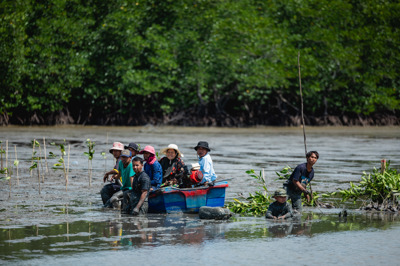
The project “Building Resilience of Cambodian Communities Using Natural Infrastructure and Promoting Diversified Livelihoods” is implemented by the United Nations Environment Programme (UNEP) and executed by the Cambodian Ministry of Environment, in collaboration with relevant sectoral ministries and local authorities. The project focuses on addressing the increasing vulnerability of Cambodia’s coastal communities—particularly in Prey Nob District, Preah Sihanouk Province—by promoting the restoration and protection of healthy coastal mangrove ecosystems as a core natural infrastructure strategy.
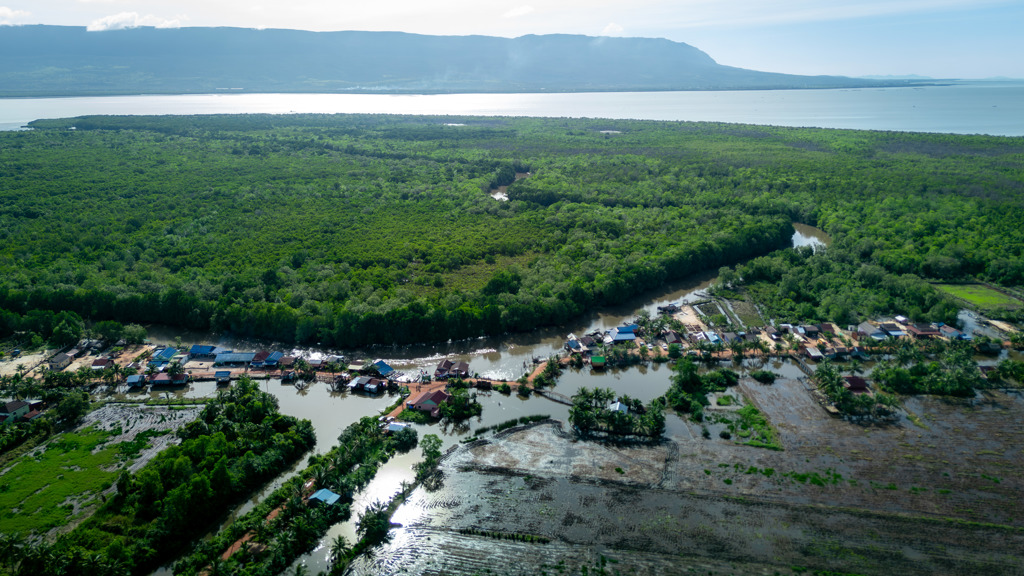
Prey Nob, the project’s target area, is a low-lying coastal district that is highly susceptible to climate risks such as sea-level rise, storm surges, saltwater intrusion, and extreme weather events. Socioeconomically, the region is of national importance as the largest rice-growing area along Cambodia’s coast, with approximately 10,000 hectares of rice fields protected by a vulnerable dyke system. The project addresses these intersecting risks through nature-based solutions that strengthen resilience across water, food, energy, and ecosystem sectors.
In addition to generating local impact, the project aims to serve as a replicable model. Lessons learned and documented throughout implementation will contribute to regional and global dialogues on natural infrastructure, resilience, and climate adaptation. A strong emphasis is placed on gender-responsive approaches and inclusive communication to ensure that all stakeholders—especially women and vulnerable groups—have a voice in shaping and benefiting from project outcomes.
For more information, please contact Seyla Sok (seylasok@gmail.com) and Channimol Ky (kychannimol@gmail.com) or visit the webpage nicambodia.iwlearn.org on iwlearn.net.
About the Ministry of Environment
The Ministry of Environment, Cambodia (MoE) was established in 1993 and was assigned by the Royal Government to lead and manage the environmental sector of the Kingdom of Cambodia.
To know more about MoE: Facebook Page | https://www.moe.gov.kh/en