Community-Led Mangrove Restoration in Cambodia as a Nature-Based Solution for Coastal Resilience
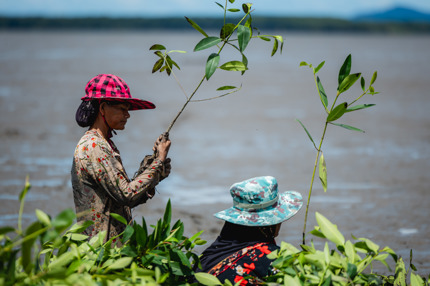
In Chumpu Khmao Village, Prey Nop District, Cambodia, a community-led mangrove restoration planted 25,000 saplings with support from the Ministry of Environment and UNEP. The initiative enhances coastal protection, supports fisheries, boosts climate resilience, and showcases how local action combined with national and international collaboration can deliver lasting environmental impact.
From Capacity Development to Field Implementation: Eco-friendly Community-Based Mangrove Crab and Blue Mussel Aquaculture in Prey Nob, Cambodia.
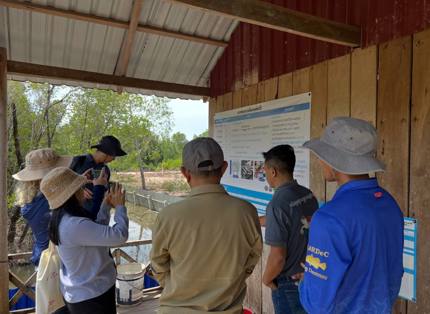
Under the GEF/UNEP-supported NI Cambodia project, coastal communities are turning training into action by piloting eco-friendly mangrove crab and blue mussel farming as climate-resilient livelihoods. Following capacity-building activities led by the Ministry of Environment with support from WEA and MARDeC, community fisheries in Prey Nob District organized farming groups, selected conservation-aligned sites, and installed initial infrastructure. A January 2026 field visit by the Project Steering Group, UNEP, and partners confirmed community readiness and marked the launch of on-the-ground implementation—demonstrating strong local ownership and commitment to nature-based livelihoods that support both incomes and mangrove conservation.
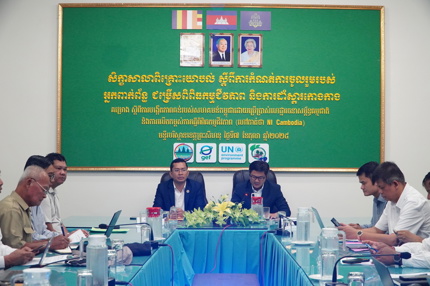
Second Project Steering Group Meeting Scales Up NI Cambodia Implementation Phnom Penh, Cambodia – 21 January 2026
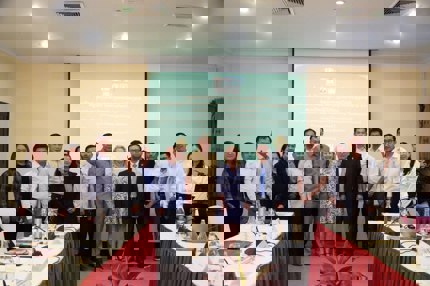
The Second Project Steering Group (PSG) Meeting of the GEF/UNEP-supported NI Cambodia project was held on 21 January 2026 in Phnom Penh to review progress, discuss the 2026 work plan and budget, and assess sustainability and knowledge management priorities. Chaired by the Ministry of Environment, the meeting recognized key achievements in mangrove restoration, livelihood pilots, and community resilience, and agreed to request a no-cost extension to complete remaining activities and consolidate results. The meeting reaffirmed strong collaboration between UNEP, national and local authorities, and partners in advancing nature-based solutions and climate-resilient livelihoods in Cambodia.
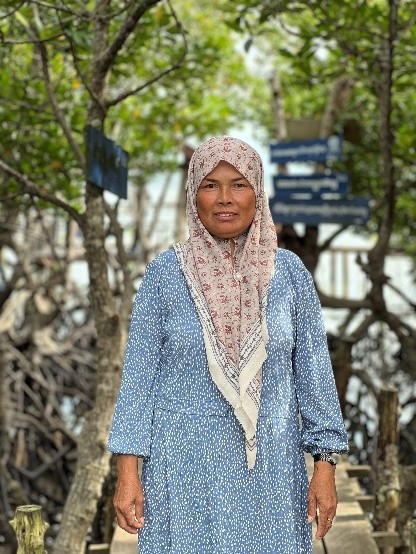
Cambodia Advances Coastal Resilience Through Community-Led Mangrove Restoration and Sustainable Livelihood Pilots
In 2025, the NI Cambodia project strengthened coastal resilience in Prey Nob District through community-led mangrove restoration and livelihood diversification. Over 500 participants planted 25,000 mangrove seedlings, reinforcing natural coastal defenses and fisheries habitats. The project also built community capacity through consultations and technical training on sustainable aquaculture, with increased participation of women and youth. These efforts set the stage for piloting climate-resilient livelihoods and expanding mangrove restoration in 2026.
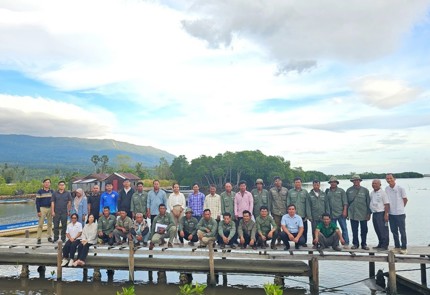
Cambodian Fishery Communities Adopt Climate-Resilient and Eco-Friendly Aquaculture
On 20–21 November 2025 in Kampot, 39 participants from eight coastal community fisheries across Preah Sihanouk, Kep, and Kampot provinces took part in a science-based training on mangrove crab and blue mussel culture under the NI Cambodia project. Led by experts from MARDeC and Wild Earth Allies, the training combined local knowledge with scientific methods, focusing on water-quality monitoring, sustainable farming techniques, and cooperative governance. The initiative strengthened technical capacity, promoted climate-resilient livelihoods, and prepared communities to pilot low-impact aquaculture that reduces pressure on wild fisheries.
Local Knowledge Meets Innovation for a Climate and Disaster-Resilient Future
A collaborative workshop in Preah Sihanouk province forges a path for nature-based solutions and sustainable livelihoods, blending local wisdom with scientific expertise
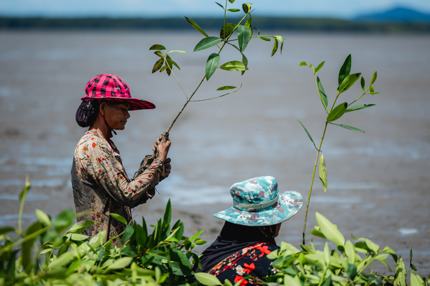
Community-Led Mangrove Restoration in Cambodia as a Nature-Based Solution for Coastal Resilience
In Chumpu Khmao Village, Prey Nop District, Cambodia, a community-led mangrove restoration planted 25,000 saplings with support from the Ministry of Environment and UNEP. The initiative engaged over 100 participants, strengthened local ownership, and restored vital coastal ecosystems. Supporting Cambodia’s Circular Strategy on Environment (2023–2028), the project enhances marine biodiversity, protects coastlines, mitigates climate change, and demonstrates how local action, backed by national and international collaboration, delivers lasting environmental impact.
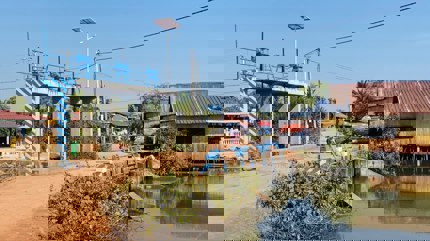
Guardians of the Polders—The Mangrove's Essential Role in Polder Stability
In Prey Nob District, Preah Sihanouk Province, coastal rice farming depends on the combined strength of engineered dykes and surrounding mangrove ecosystems. While dykes and sluice gates control flooding and saltwater intrusion, mangroves act as natural buffers that protect infrastructure and farmland from storms and erosion. The project “Building Resilience of Cambodian Communities Using Natural Infrastructure and Promoting Diversified Livelihoods” supports this integrated approach to safeguard the polders and strengthen long-term climate resilience.
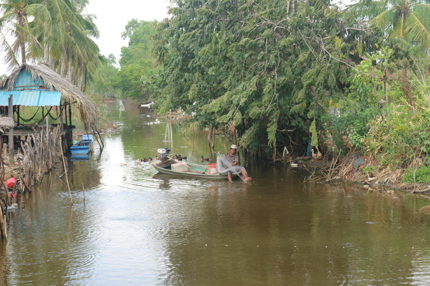
Voices of Coastal Communities Insights on Communication, Livelihoods, and Resilience
In Prey Nob District, Preah Sihanouk Province, coastal communities are strengthening climate resilience by restoring mangroves and diversifying livelihoods. Through community consultations and assessments, the project promotes sustainable resource management, alternative income opportunities, and reduced pressure on ecosystems—helping communities adapt to climate impacts while protecting vital coastal environments.
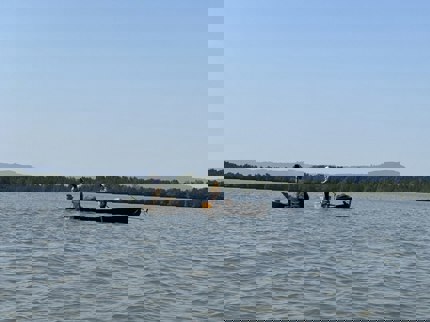
Exploring the Site & Ideal Conditions for Thriving Mangrove Plantation
In Prey Nob District, Preah Sihanouk Province, UNEP and Cambodia’s Ministry of Environment are strengthening climate resilience through natural infrastructure. The project restores and protects coastal mangroves to reduce climate risks, safeguard 10,000 hectares of rice fields, and support diversified livelihoods. Through community engagement and nature-based solutions, the initiative enhances ecosystem and community resilience while contributing to sustainable coastal development.