Cambodian Fishery Communities Adopt Climate-Resilient and Eco-Friendly Aquaculture
A Collaborative Training Empowers Coastal Communities with Science-Based Techniques for Mangrove Crab and Blue Mussel Culture.
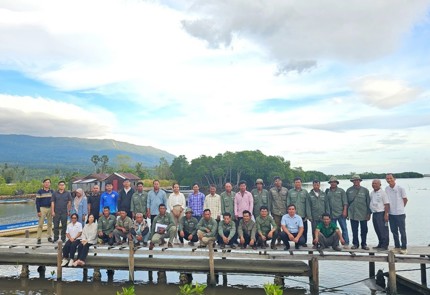
KAMPOT, CAMBODIA – On 20–21 November 2025, coastal communities in southern Cambodia strengthened their climate resilience through a science-based aquaculture training that combined local knowledge with advanced marine research. The two-day training on “Techniques for Mangrove Crab and Blue Mussel Culture for Coastal Community Fisheries” was held at the Prek Thnaot Community Fishery Meeting Hall and brought together 39 participants, including 10 women, from eight coastal community fisheries. These included two communities in Kampot Province, two in Kep Province, and four in Prey Nob District, Preah Sihanouk Province (Prey Nob 2, Boeung Raing, Chrolorng, and Bek Krang). Representatives from the Ministry of Environment, the Provincial Fisheries Administration, Wild Earth Allies (WEA), and the Marine Aquaculture Research and Development Center (MARDeC) also participated in the training.
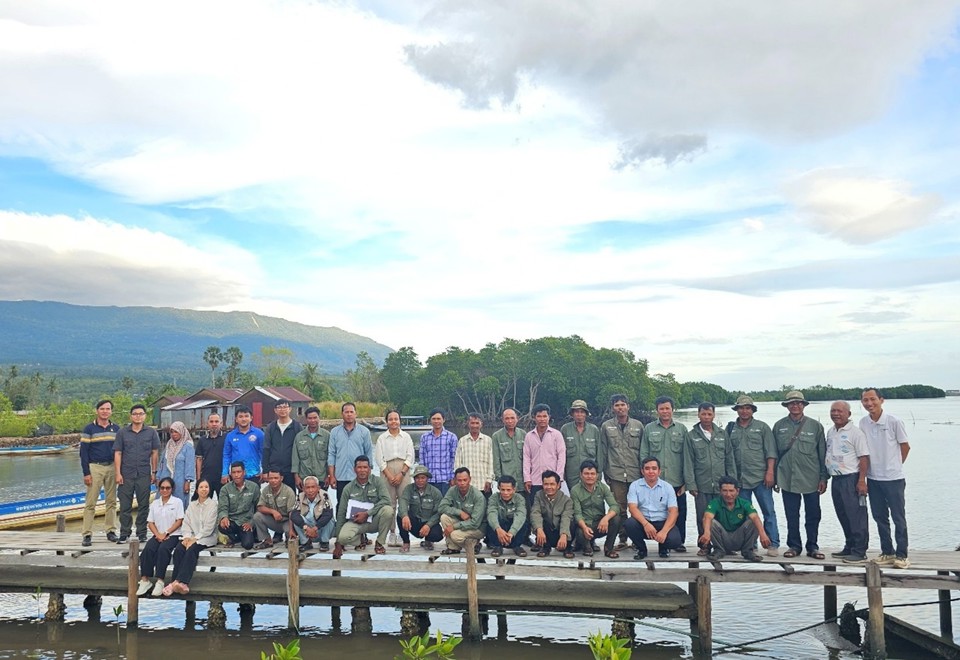
Photo by: Mrs. Sok Sreymau
Aquaculture—particularly the cultivation of mangrove crabs and blue mussels—has been identified as a viable and low-impact livelihood option for coastal communities. Mangrove crab, also known as mud crab, culture offers a resilient, high-value alternative income source and, when implemented through a group-farming model, helps strengthen community cooperation and promote shared benefits. Moreover, expanding aquaculture reduces communities’ dependence on catching natural bait fish for feed, thereby easing pressure on wild fisheries resources. This community-driven commitment to sustainable livelihood diversification was reaffirmed during the Consultation Workshop on Stakeholder Engagement, Livelihood Diversification Options, and Mangrove Restoration held on 7 October 2025, where participants identified small-scale aquaculture as their top priority option under the NI Cambodia project.
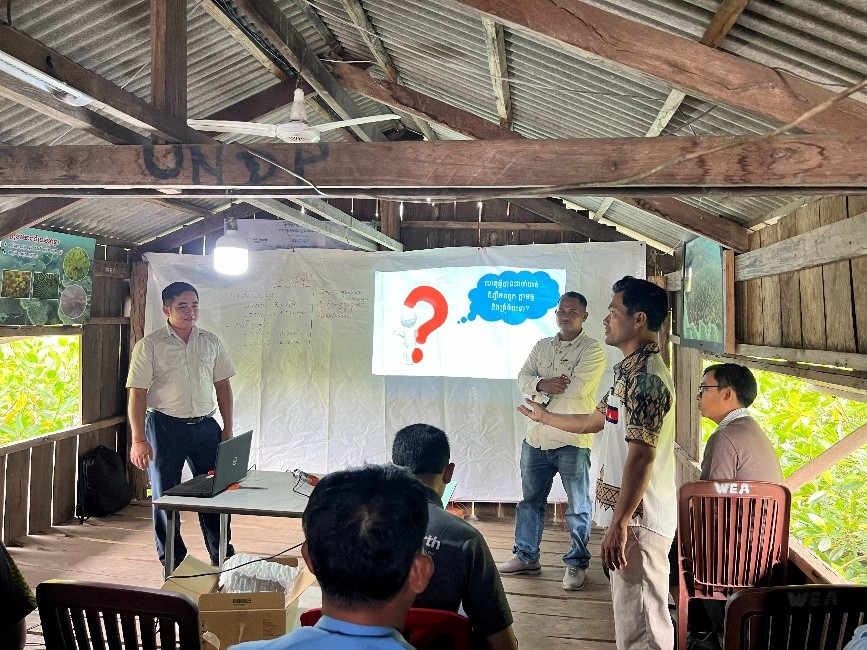
Throughout the training, MARDeC experts delivered scientific modules covering the biological characteristics, growth patterns, and ecological requirements of mangrove crabs and blue mussels—two species identified as viable for small-scale aquaculture in Prey Nob, Kampot, and Kep. Participants from three community fisheries in Prey Nob shared their experiences with mangrove crab aquaculture, detailing their methods of culture, the obstacles they faced, and the solutions they used for their small-scale operations. However, these communities currently rely solely on traditional methods and experience in their farming practices. Therefore, the training’s centerpiece was the scientific and technical capacity building provided, with a curriculum designed to bridge this traditional knowledge with modern, data-driven farming methods, ensuring sustainable and economically successful outcomes.
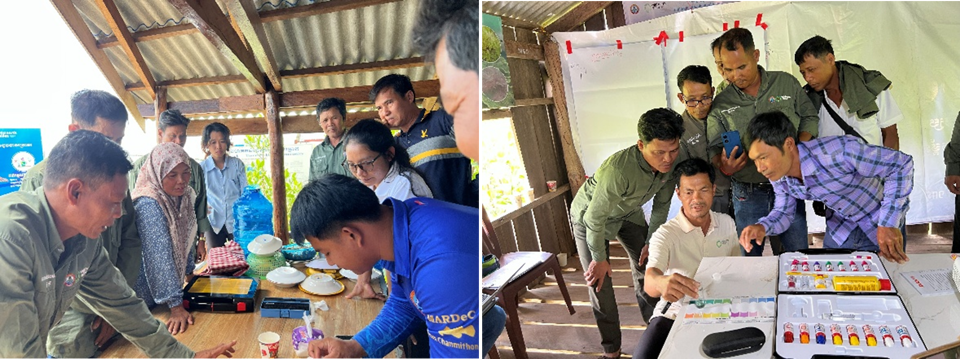
Participants were trained to understand how key environmental factors—including salinity, temperature, pH, and dissolved oxygen—shape the survival and growth of mangrove crabs and blue mussels. They gained practical experience using scientific water-quality monitoring tools to detect early signs of contamination and diseases and to reduce stock losses. The course also introduced essential husbandry practices such as species selection, farm site preparation, feeding, and harvesting, along with a cooperative farming model that reduces dependence on natural bait fish and supports sustainable resource management. Hands-on sessions strengthened participants’ ability to measure water parameters and use culture equipment, enabling them to apply science-based decision-making in aquaculture operations.
The training also introduced business planning, economic analysis, and cooperative governance to prepare communities for small-scale aquaculture operations. WEA guided participants in forming farming groups, defining roles, and establishing benefit-sharing arrangements to strengthen local ownership. By the end of the program, participants had outlined clear steps toward piloting mangrove crab and blue mussel farming under the NI Cambodia project, and evaluations showed increased confidence in applying scientific techniques and monitoring tools.