Exploring the Site & Ideal Conditions for Thriving Mangrove Plantation
 In Prey Nob district, Preah Sihanouk province—a low-lying coastal region vital to Cambodia's food security—the United Nations Environment Programme (UNEP), in collaboration with Cambodia's Ministry of Environment and local authorities, is implementing a climate resilience initiative. This project aims to reduce the vulnerability of coastal communities to climate variability by promoting natural infrastructure solutions, particularly through the restoration and protection of coastal mangrove ecosystems.
With 10,000 hectares of rice paddies safeguarded by dikes, the region faces growing threats from storm surges, rising sea levels, and saltwater intrusion. The project focuses on diversifying livelihoods and strengthening natural infrastructure—such as mangroves—to protect communities, ecosystems, and Cambodia’s largest coastal rice-producing zone. By restoring mangroves and demonstrating their economic and environmental benefits, the initiative enhances resilience against climate impacts while contributing to global natural infrastructure efforts.
As the project moves from its inception to full implementation in 2025, key initiatives include:
- Engaging local stakeholders by encouraging solutions for natural infrastructure and strengthening community engagement.
- Resilience of Communities and Ecosystems by bringing nature-based solutions into practice and testing out alternate sources of income.
- Strengthening sustainability and coordination by linking up with national and international resilience projects and looking into potential funding sources.
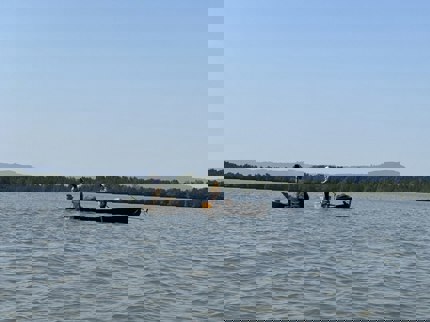
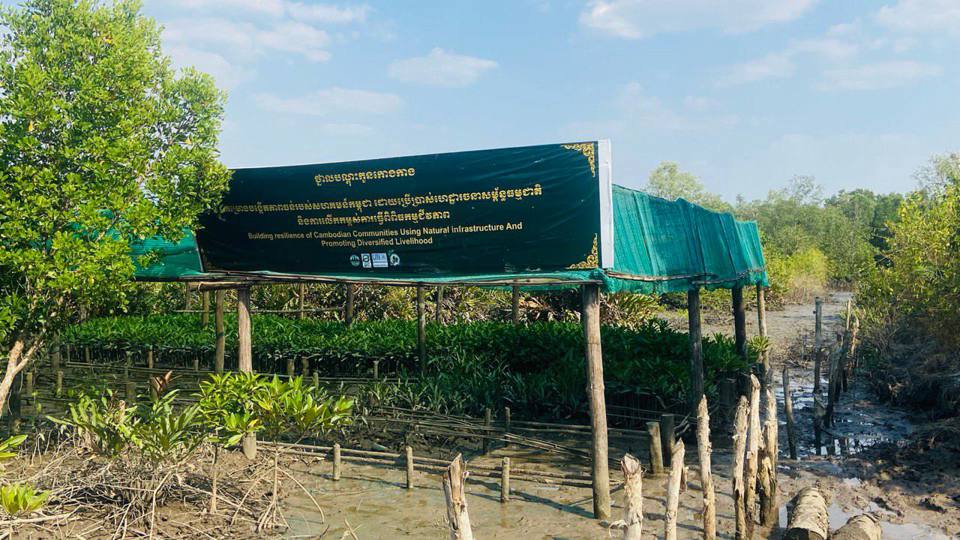
A recent site inspection in the Prey Nob II fishing community identified over 30 hectares suitable for mangrove restoration. The project’s technical experts assessed soil conditions, water salinity, water depth, existing mangrove species, wind patterns and wave speed. While the sites are well-suited for mangrove planting, the installation of bamboo stakes and windbreak barriers is necessary to protect saplings. Rhizophora apiculata and Rhizophora mucronata were found as dominant species that are suitable for planting in these locations, with highly recommending April or May by local experts.
The project's nursery has successfully cultivated 10,000 Rhizophora apiculata mangrove seedlings, reaching heights between 0.4 to 0.6 meters.
Engagement with community representatives, the Department of Agriculture, Forestry, and Fisheries, and local authorities focused on seed selection, planting techniques, seedling maintenance, replanting efforts, and windbreak construction. These collaborative efforts ensure long-term success in strengthening Cambodia’s coastal resilience through sustainable natural infrastructure solutions.