Cambodia Advances Coastal Resilience Through Community-Led Mangrove Restoration and Sustainable Livelihood Pilots
2025 Recap: A Year of Inspiring Stories from Prey Nob
In 2025, Cambodia made significant progress in strengthening coastal resilience under the GEF/UNEP/Ministry of Environment project “Building Resilience of Cambodian Communities Using Natural Infrastructure and Promoting Diversified Livelihoods (NI Cambodia).” The project advanced community-led mangrove restoration, improved scientific capacity for aquaculture, and deepened engagement with local stakeholders in Prey Nob district including women and youth.
A key achievement was the large-scale mangrove planting event on 16 June 2025, where more than 500 participants planted 25,000 mangrove seedlings in the Prey Nob 2 Community Fishery. Supported by a community-run nursery in Prek Kampong Smach, this effort strengthened natural coastal defenses while restoring critical habitats for fisheries.
Throughout the year, the project conducted field assessments and consultations to better understand community needs, gender dynamics, and barriers to diversified livelihoods. A national–subnational dialogue on 7 October 2025 helped refine mangrove restoration techniques and identify practical livelihood options, with communities prioritizing small-scale aquaculture and home gardening as climate-resilient choices.
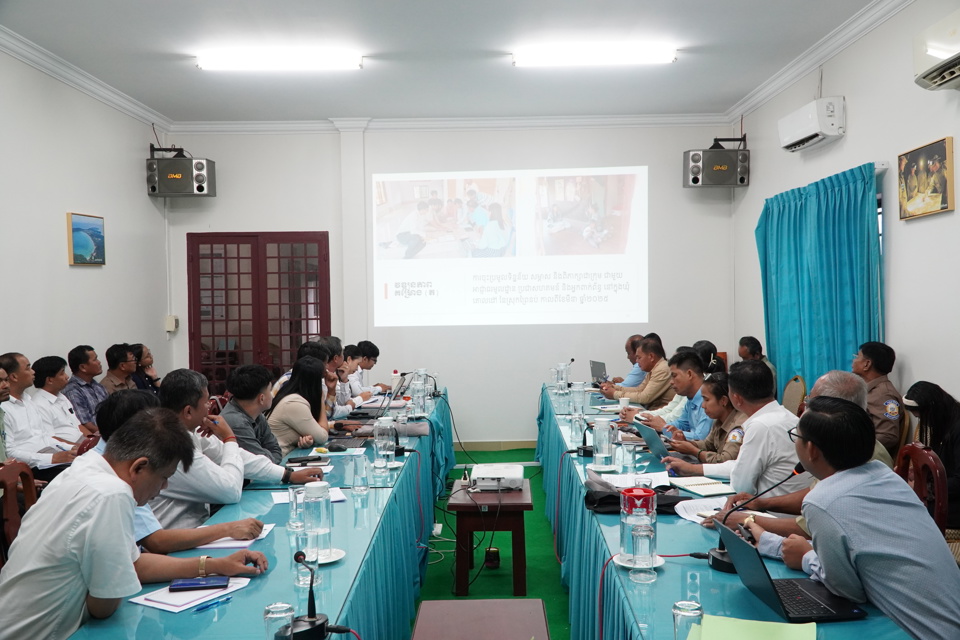
To build technical capacity, the project delivered a training on 20–21 November 2025, bringing together 39 participants from four Community Fisheries (CFis) from Preah Sihanouk province’s Prey Nob district as well as from other four CFis in coastal Kep and Kampot provinces. Experts from the Marine Aquaculture Research and Development Center (MARDeC) and the Wild Earth Allies (WEA) provided science-based training on mangrove crab and blue mussel culture, water-quality monitoring, farm site preparation, and group governance. Participants exchanged their experiences and lessons learned, developed clear plans to launch aquaculture pilots that reduce pressure on wild fisheries and promote sustainable resource management.
These achievements were strengthened by active partnerships among government agencies, NGOs, and CFis. Women’s participation in restoration activities, training programs, and livelihood planning also increased, contributing to more inclusive and equitable resilience-building.
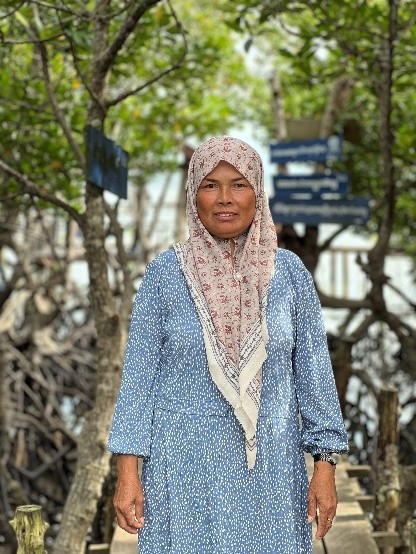
During the training, Ms. Laoh Sa Deah—the only female community leader among the eight participating communities—shared an important reflection:
“This training is very useful for me and my community. Learning how to monitor water quality gives us the confidence to manage our aquaculture farms more safely and effectively. It helps us protect our production and make better decisions.”
Her experience highlights the value of investing in women’s technical capacity, demonstrating how targeted training can empower female leaders to take on stronger roles in sustainable aquaculture and community-based natural resource management.
Way Forward
In 2026, the NI Cambodia project will move into full implementation. Selected CFis will begin piloting mangrove crab and blue mussel farming using the scientific methods learned in 2025, supported by strengthened cooperative governance and benefit-sharing systems. The project will also expand mangrove restoration and continue monitoring the 25,000 seedlings planted in 2025, using improved nursery practices and community-led protection. Knowledge-sharing exchanges, documentation of lessons learned, and contributions to IW:LEARN will help scale successful nature-based and livelihood approaches across Cambodia’s coastline.