Local Knowledge Meets Innovation for a Climate and Disaster-Resilient Future
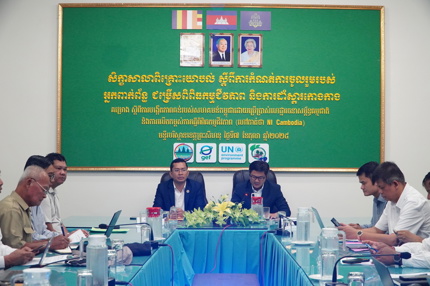
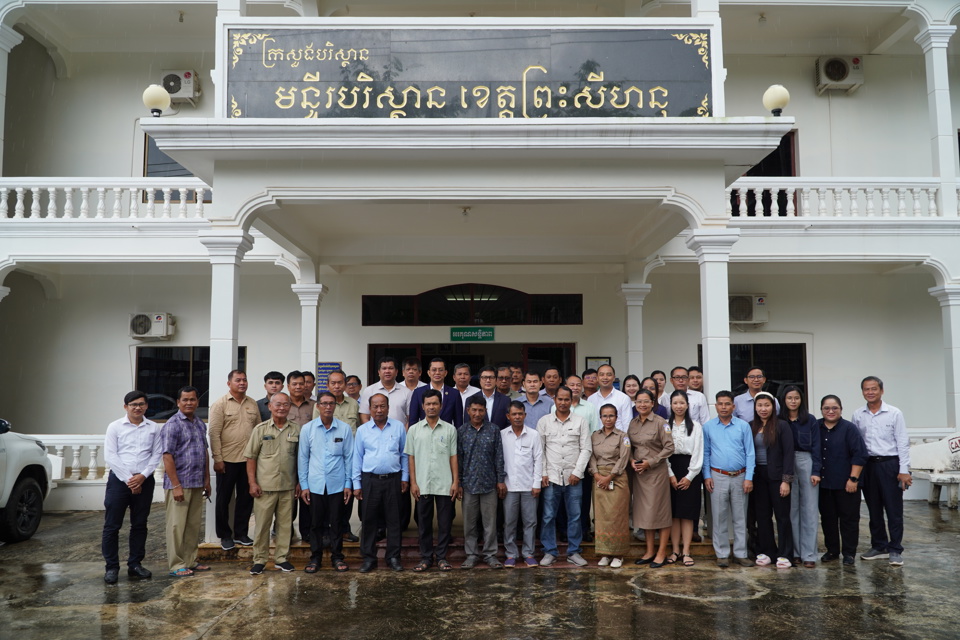
PREAH SIHANOUK, CAMBODIA – On October 7, 2025, community leaders, government officials, coastal experts and development partners came together to strengthen the climate and disaster resilience of Cambodia’s vulnerable coastline. The consultation workshop on Stakeholder Engagement, Livelihood Diversification Options, and Mangrove Restoration, part of the “Building Resilience of Cambodian Communities Using Natural Infrastructure and Promoting Diversified Livelihoods” (NI Cambodia) project, gathered 45 participants, including 15 women, to co-design strategies that put nature at the center of climate change adaptation and disaster risk management.
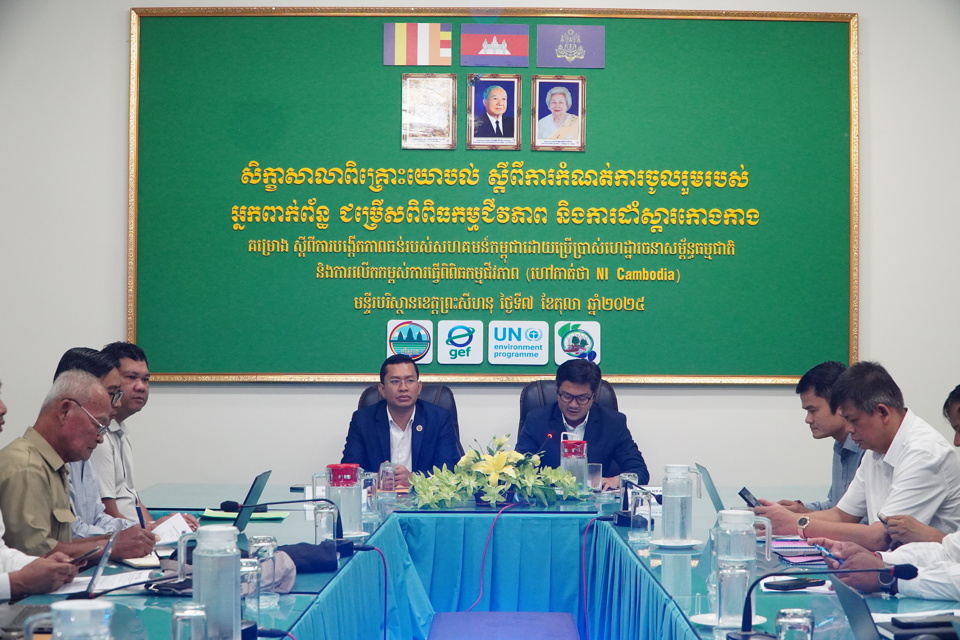
Photo by: Mr. Kem Chanpaly
The consultation workshop highlighted a strong community consensus to begin with mangrove restoration—a vital step for sustaining local livelihoods. In a region where most people rely on fishing, participants recognized mangroves as essential for food security and ecosystem health. Choosing restoration over short-term gains reflects their commitment to long-term resilience. This commitment is already visible through a mangrove planting event held on June 16, 2025, which engaged over 500 members of the Prey Nob 2 fishery community.
The workshop highlighted how combining local knowledge with scientific expertise leads to practical and sustainable solutions. Participants worked with experts to refine mangrove restoration methods, recommending that seedlings be grown in nurseries for 6–12 months and protected with bamboo fencing. Officials also emphasized collaboration with the Fisheries Administration to standardize Khmer names for mangrove species and prevent the spread of invasive plants—ensuring restoration is both technically sound and locally relevant.
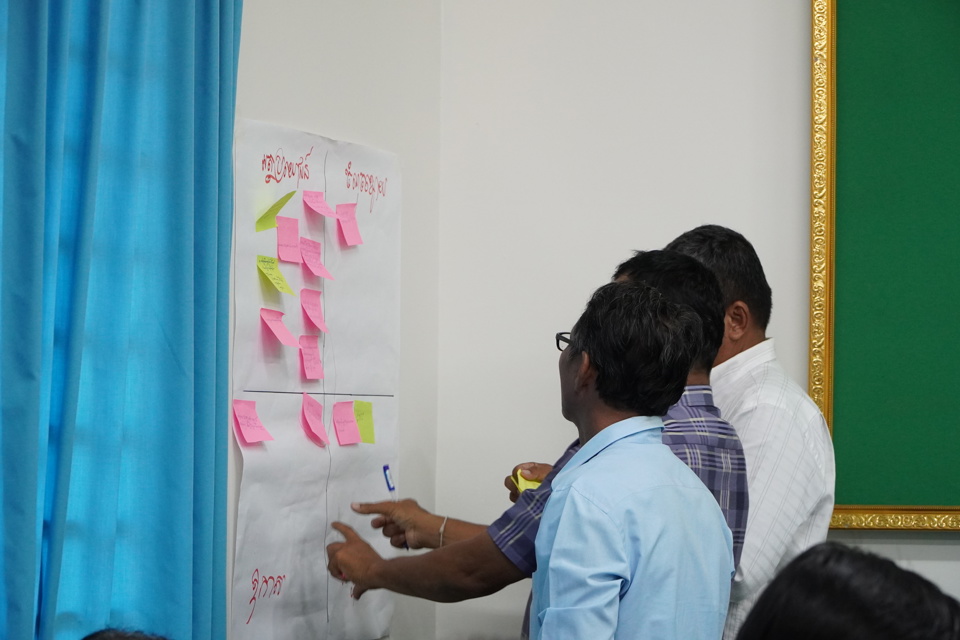
Building on this, the community identified home gardening and small-scale fisheries as the most feasible livelihood options to strengthen food security and income. They deliberately ruled out higher-risk ventures such as ecotourism and rice-fish farming, recognizing their vulnerability to poor infrastructure and saltwater intrusion. This practical approach reflects the community’s strong sense of ownership and commitment to long-term, climate-resilient development.
The workshop concluded with a shared vision for action, as the project team committed to integrating community feedback into the next phase of implementation. His Excellency KOP Roly, Undersecretary of State of the Ministry of Environment, emphasized how these local initiatives align with Cambodia’s broader environmental leadership—highlighting the country’s role as a “Sea Treaty Champion” for its early ratification of the High Seas Treaty. By combining local wisdom, scientific knowledge, and strong collaboration, the NI Cambodia project is paving the way for a more sustainable and resilient future along Cambodia’s coasts.