Guardians of the Polders—The Mangrove's Essential Role in Polder Stability
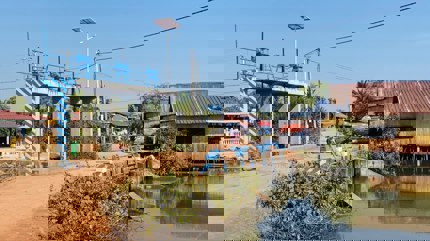
In Prey Nob District, Preah Sihanouk Province, the symbiotic relationship between human-engineered dykes and mangrove ecosystems highlights a fundamental principle: coastal agriculture flourishes when built infrastructure works in harmony with natural ecosystems.
The Prey Nob polders, spanning 10,500 hectares along the Cambodian coast in the Gulf of Thailand, depend on both human innovation and ecological resilience to manage seawater intrusion. The system includes 90 kilometers of rehabilitated earth dykes and 36 sluice gates, which serve as the core mechanisms for controlling floods and saltwater infiltration.
However, the surrounding mangrove forests play an equally vital—though often overlooked—role in stabilizing the polders. Acting as natural coastal barriers, mangroves reduce shoreline erosion and buffer storm surges that could otherwise compromise the dykes. Additionally, their dense root systems help filter saltwater, enhancing the effectiveness of the engineered infrastructure in protecting the freshwater-dependent rice fields. This integrated approach illustrates the importance of aligning human development with ecosystem conservation to ensure long-term agricultural sustainability in coastal regions.
Water Management System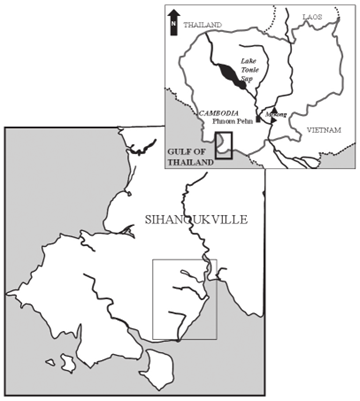
Prior to rehabilitation efforts, deteriorating infrastructure frequently resulted in crop failures within the Prey Nob polders, with rice yields averaging as low as 1.6 tons per hectare. To address these challenges, the French Development Agency (AFD) implemented a comprehensive project that rehabilitated dykes, sluice gates, and canals, and established the Polder Users Community (PUC) in 2000—Cambodia’s first farmer-led water management organization.
The PUC, comprising approximately 17,000 members and around 50 community leaders and committee members across six polders, was tasked with overseeing water management and infrastructure maintenance in collaboration with the Ministry of Water Resources and Meteorology (MoWRAM). Its responsibilities also included collecting user fees and enforcing water use regulations. The PUC’s technical and organizational accomplishments were widely recognized.
AFD’s interventions were multifaceted, with the explicit objective of supporting the development of a sector-wide public policy framework. This framework was founded on the principle of shared responsibility between MoWRAM, which manages Cambodia’s irrigation systems, and the water users, organized through Farmer Water Users Groups (FWUCs).
Following the conclusion of the AFD project in 2018, fee collection from rice farmers ceased. Since then, responsibility for water management and infrastructure maintenance has been fully assumed by MoWRAM.
Communities Impact and Sustainability Concern
While the PUC’s technical and organizational success is evident, its long-term viability depends on the continued maintenance of infrastructure and securing sustained government support.
As emphasized by Mr. Yim Boy, Vice Community Leader of the Polder Users Community, “Farmers highlight that without the polders and collective management, saltwater intrusion would devastate crops, returning livelihoods to the hardships experienced before rehabilitation.”
Mr. Boy also noted, “Mangroves likely enhance the sustainability of this system by mitigating tidal pressures on the dykes and preserving soil integrity. However, long-term stability relies on the preservation of both infrastructure and mangrove ecosystems. Rising sea levels and climate extremes necessitate robust and continuous dike maintenance.
The project titled "Building Resilience of Cambodian Communities Using Natural Infrastructure and Promoting Diversified Livelihoods" in Prey Nob District, Preah Sihanouk Province, is expected to play a crucial role in safeguarding the polders and ensuring their continued functionality.