Second Project Steering Group Meeting Scales Up NI Cambodia Implementation Phnom Penh, Cambodia – 21 January 2026
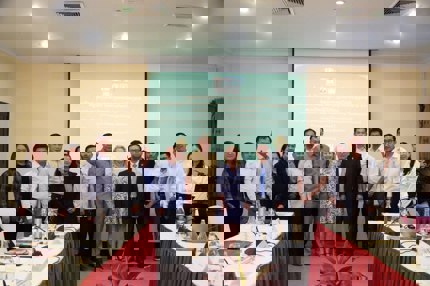
The Second Project Steering Group (PSG) Meeting for the “Building Resilience of Cambodian Communities Using Natural Infrastructure and Promoting Diversified Livelihoods (NI Cambodia)” project was successfully convened on January 21, 2026 at the Cambodiana Hotel in Phnom Penh, Kingdom of Cambodia.
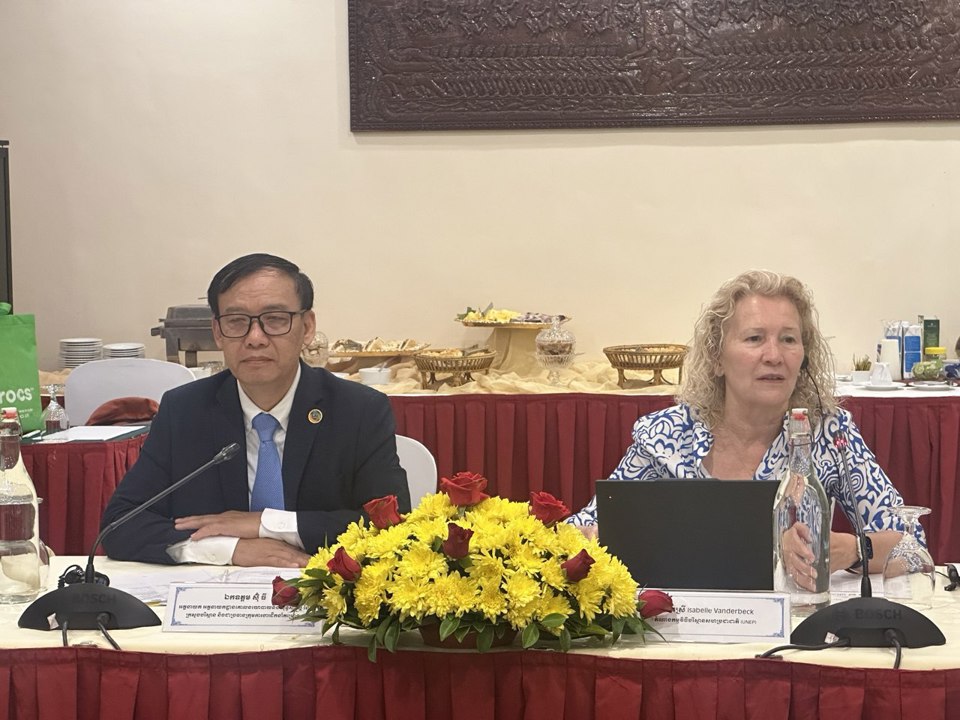
The meeting was chaired by H.E. Sum Thy, Director General of the General Directorate of Policy and Strategy (GDPS), Ministry of Environment (MOE)/National Council for Sustainable Development (NCSD) and Chair of the PSG. Participants included Ms.Isabelle Vanderbek, United Nations Environment Programme (UNEP) Task Manager; Mr. Ouk Navann, Deputy Director General, GDPS and Project Director; Mr. Ou Chanthearith, Director, GDPS and Project Manager; and representatives from the Ministry of Women’s Affairs, the Ministry of Agriculture, Forestry and Fisheries, the Ministry of Water Resources and Meteorology, and the Ministry of Land Management, Urban Planning and Construction/National Committee for Coastal Management and Development, as well as Preah Sihanouk provincial and Prey Nob district administrations, in total 20 participants, including five women.
In his opening remarks, H.E. Sum Thy emphasized the MOE’s strong commitment to climate action and biodiversity conservation. He highlighted that although NI Cambodia is a relatively small-scale project, it has generated meaningful results and provides a strong foundation for scaling up actions supporting climate change adaptation, mangrove restoration, biodiversity conservation, and improved livelihoods for local communities.
Ms. Isabelle Vanderbeck, UNEP Task Manager, welcomed the project milestones achieved and extended her appreciation to the MOE for their leadership as well as to all stakeholders for their collaboration. She suggested that the project develops concrete sustainability and knowledge management plans to provide enabling environment for replication.
The project team presented progress and key achievements to date, including vulnerability assessments, mangrove restoration activities, and livelihood intervention pilots aimed at strengthening community resilience. The 2nd PSG meeting subsequently discussed the 2026 work plan and budget, sustainability and knowledge management plans, and a joint field visit agenda to Prey Nob district to assess on-the-ground implementation progress. Among the key outcomes of the meeting was the agreement to request for a no-cost extension of the project implementation period beyond March 2026, enabling the project team to effectively complete remaining activities and consolidate results in line with the project’s objectives. The meeting further agreed that a revised work plan and budget plan would be developed to reflect the extended timeline and re-submitted to the PSG for their online review and approval. The MOE/NCSD will then submit a formal no-cost extension request along with the proposed revised work plan and budget to UNEP for consideration and endorsement.
-960px.jpg)
In conclusion, the meeting underscored the importance of continued close cooperation between UNEP and MOE/NCSD, while encouraging the exploration of opportunities to further support Cambodia’s efforts on climate change adaptation, address loss and damage associated with climate change impacts, and scale up similar nature-based solutions in other vulnerable areas. The meeting reaffirmed the shared commitment of national institutions, local authorities, communities, and development partners to strengthening community resilience through using natural infrastructure and promoting diversified livelihoods in Cambodia.